I am one of the women this project was built for. The Eco-Feminist Energy Justice project is run by the Get Together Youth Organization, working alongside other civil society groups under the Zingwangwa Youth Network, with funding and support from SHINE Collab. It exists because in Blantyre District, where I live, between 85 and 95 percent of us still cook with charcoal and firewood, and it is women who carry the true cost of that.
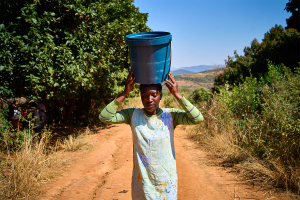
Before this project, my days were shaped by the search for fuel. Some women in my community walk long distances just to gather firewood, spending hours that could go toward their families, their businesses, their rest. Others buy charcoal, which is expensive and fills our homes with smoke every time we cook, smoke that settles in our lungs and our children’s lungs, smoke that comes from trees stripped from land that is already struggling under changing rainfall and rising heat. Every meal I cooked came with an invisible cost to my health and to the environment around me.
This project has begun to change that. With cleaner, cheaper, more accessible cooking energy, I no longer lose so many hours of my day to fuel-gathering. That time now goes toward my own business, toward building something for my future instead of simply surviving the present. This is what SHINE’s support has made possible; not charity, but the return of my own time and my own health.
At the community level, the change reaches further than my own household. Cooking has always been treated as women’s work here, so it has always been women and girls who pay the price for energy poverty. With cleaner energy now more available, girls have more hours to study instead of searching the bush for firewood, and households across our community are breathing less smoke. The project is also restoring something harder to measure; dignity. Some women in the charcoal trade were leaving home before dawn to buy stock at the charcoal stations, and along that road, in the dark, they faced abuse and danger simply trying to earn a living. This project offers us a way out of that risk.
SHINE Collab’s ecofeminist approach helped me understand that my daily struggle with fuel was never a small, private problem; it is connected to deforestation, to the changing climate, to a system that has long assumed women’s labour and women’s time are free to take. I now see myself differently: not only as someone burdened by energy poverty, but as a guardian of the trees and land my community depends on, and as part of a wider movement of women refusing to carry that burden silently any longer.
I hope to keep learning within SHINE’s ecofeminist spaces; how other women across Malawi and the region are building energy alternatives, resisting environmental degradation, and reclaiming their time and safety. This project has shown me what is possible when women’s knowledge and women’s needs are placed at the centre of the solution, and I want to carry that learning forward into my own community, for as long as this struggle continues.